

What to do right now
Stop the water and protect the floor
Do these in order. None of them needs tools, and they limit the damage while you decide what is wrong.
- Turn the breaker off for an electric unit, or turn the gas control to off for a gas unit.
- Close the cold water supply valve on the pipe above the heater.
- Put a pan, bucket or towels under the leak and move items off the floor.
- Open a hot tap elsewhere to relieve pressure in the lines.
- If you smell gas, leave the building and call the gas utility or 911 before you call a plumber.
Do not drain the whole tank unless you are sure how. Very hot water can scald, and a partly drained electric heater that is switched back on can burn out its elements. If the leak is heavy or you cannot reach the shutoff, close the main valve at the house and call us.
Where the water is really coming from
Water shows up on the floor under the heater, which makes every leak look like a bottom leak. Wipe the tank and pipes dry, then watch for a bead of water to appear. Where the first drop forms tells you the source.
| Source | How it looks | Usual outcome |
|---|---|---|
| Temperature and pressure relief valve | Drips from the discharge pipe on the side | Valve or pressure issue, often repairable |
| Pipe fittings on top | Water runs down the tank sides | Tighten or replace the fitting |
| Drain valve at the base | Slow drip from the spigot | Replace the valve |
| Condensation | Light dampness during heavy use or on gas units | Often harmless, monitor it |
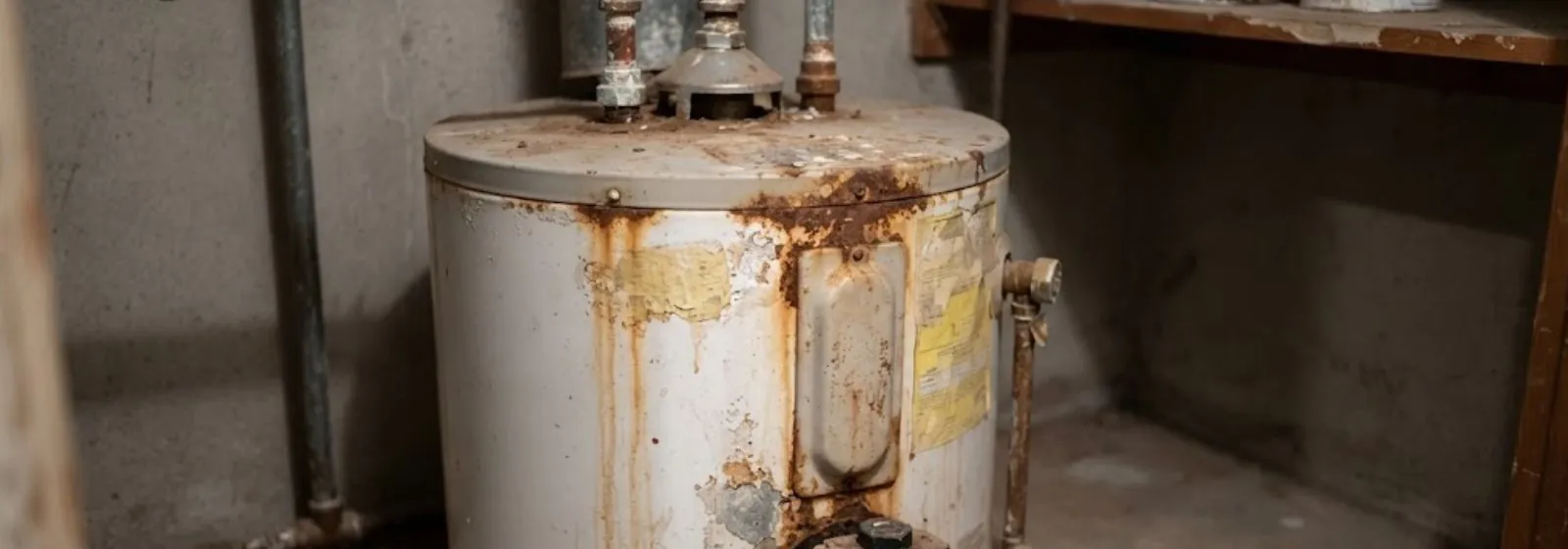
| Tank itself | Steady flow from the bottom seam, rust streaks | Replace the heater |
The relief valve and pressure
The relief valve opens on purpose when pressure or temperature climbs too high. A steady drip from its discharge pipe can mean thermal expansion in a closed system, or very high supply pressure. A plumber checks with a gauge and may add an expansion tank, which is cheaper than replacing a heater damaged by pressure.
Never cap a relief valve or plug its pipe. That valve is the last safety device on the system.
Fittings, drain valve and condensation
The supply and hot water connections at the top can weep when a flexible connector ages. Water then runs down the jacket and collects at the base. If the leak starts there, a new connector often ends it.
The drain valve at the bottom of the tank is plastic on many models and cracks when it gets bumped or overtightened. A new brass valve fixes many of these. Condensation is real but usually shows up as light moisture, not a puddle.
When it means replacement
A tank that leaks from the seam or base has corroded through. The inner steel liner has failed, and no patch lasts. Sediment, age and water chemistry all play a part, and the usual outcome is a new unit.
Repair is reasonable when
- The leak traces to a valve, connector or fitting
- The tank is dry when wiped and watched
- The heater is otherwise in good shape
- You want to confirm pressure before deciding
Replace when
- Water comes from the bottom seam of the tank
- Rust streaks run down the base or jacket
- The unit is old and has had other repairs
- Sediment noise and poor hot water come with the leak
If it is the tank, our water heater replacement visit sizes and swaps the unit, and our water heater repair crews handle valve, connector and thermostat faults. A same-day appointment is available when schedules allow.
Preventing a repeat leak
A drain pan with a pipe to a safe discharge point catches small leaks before they reach flooring. Check the relief valve discharge for drips every few months. Flush sediment on the schedule your manufacturer suggests.
Also look at the anode rod, a replaceable part that sacrifices itself to protect the tank steel. Plumbers often find it spent in tanks that failed early.
Royal Palm Beach note: permits for a new heater
The Village building department says most work in the Village requires a building permit, and it does not publish a rule specific to water heaters. Call the department at (561) 790-5128 before you replace the unit and ask what applies to your address.
Palm Beach County has a like-for-like change-out form for unincorporated areas, which is a county process and not the Village's. Do not assume it covers a Village address. A licensed plumber can also confirm your contractor on MyFloridaLicense.com.
Source type: Village government pages and county building forms
A word on nearby areas
The same steps apply across the area we serve. In Wellington, newer and older homes mix, and garage heaters are common. In Loxahatchee Groves, homes on well water often have more sediment, which can shorten a tank's life.
Sources and standards
Relief valves, drain pans and discharge piping are installation standards found in the Florida Building Code, Plumbing, 8th Edition (2023). The Village of Royal Palm Beach publishes no water heater specific rule, so call its building department at (561) 790-5128 before replacing a unit.
Royal Palm Beach leaking water heater questions
Can I keep using a water heater that leaks from the bottom?
Not safely. Shut off power or gas and the water supply first. A tank that leaks from the base only gets worse, and a failure can flood a room quickly.
Is water around the base always a tank failure?
No. Fittings, the relief valve, the drain valve and condensation all produce water at the base. Dry everything and watch to find the true source.
Is it normal for the relief valve to drip?
A small drip can come from thermal expansion, but a steady one needs a pressure check. Do not plug the pipe.
Do I need a permit to replace a water heater in Royal Palm Beach?
The Village says most work needs a permit and does not publish a water heater rule. Call the building department at (561) 790-5128.
What if my garage floor is slanted and the water runs away from the heater?
Water can travel several feet before you see it, so trace it back across the slab to the unit. Check the lowest wall corner too.
Does the county water chemistry shorten heater life in Royal Palm Beach?
We cannot say. The utility reports we reviewed do not give hardness, so we do not claim a local effect. Sediment flushing and the anode rod help any tank.
Question not answered here? Call the 24/7 line at (561) 448-8545 and talk to a plumber.