

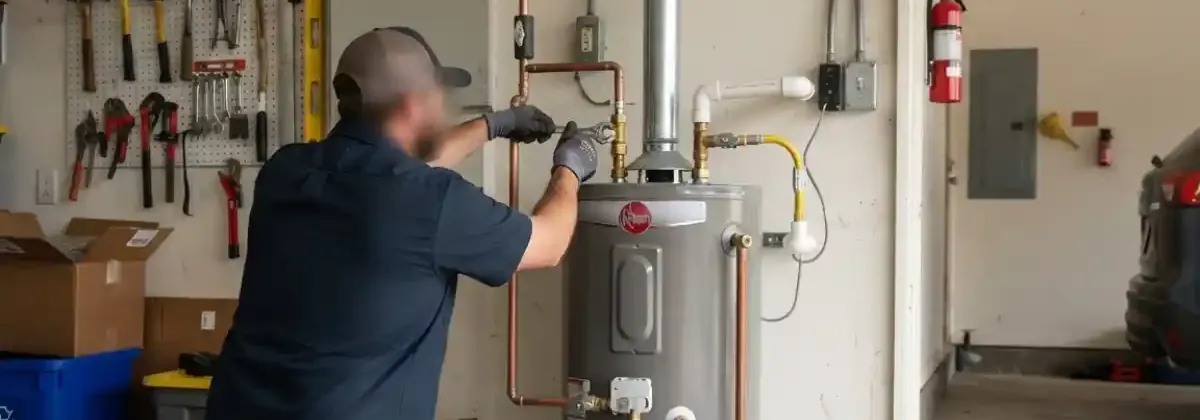
What a proper water heater installation includes
A good install is more than hooking two pipes to a tank. It sets the heater on a stable, level base, adds shutoff valves and flexible connectors, and pipes the relief valve so any discharge goes somewhere safe. On gas units it adds a flue, a sediment trap and a leak test of the gas joints.
If your current tank is leaking or dead, you may need water heater replacement on a faster schedule. This page is for planned work, such as a new build, a remodel, a relocation or an upgrade you decided on before anything broke.
Choosing the type and size before the visit
| Type | Good for | Needs |
|---|---|---|
| Electric tank | Homes without gas | A 240-volt circuit and a correct breaker |
| Gas tank | Homes with gas service | A flue, combustion air and a gas connection |
| Hybrid heat pump | Lower energy use | Open air, floor space and a condensate drain |
| Tankless | Space saving, endless hot water | Larger gas line or high electrical load |
Sizing starts with your household. We count bathrooms, how many people shower in the morning and any large tubs or multi-head showers. A 40-gallon tank suits many smaller homes, and bigger families often move up to 50 gallons or more.
Where the heater goes: garage, closet or inside the home
Garage installs are common and easy to service, but they need protection from impact and a drain pan. Closets keep the unit out of sight but limit airflow, which matters for gas draft and for heat pump models. Indoor locations over finished floors need a pan and a pan drain line that runs outside, because a tank leak does the most damage there.
A heat pump unit also cools and dehumidifies the space it sits in. That helps in a hot garage and hurts in a small closet, so location matters more for these than for a standard tank.
Safety parts every install should have
Relief valve and discharge pipe
The valve opens when temperature or pressure runs too high. Its discharge pipe should run downward to a visible, safe spot.
Expansion tank
On a closed system, heating water has nowhere to expand. The tank absorbs that pressure and protects fixtures and the relief valve.
Drain pan and pan line
A pan under the tank catches a slow leak, and its line carries the water out of the house.
Shutoff and sediment trap
A cold shutoff lets you isolate the heater, and gas units need a trap that catches debris before the burner.
Electric and gas connections
Electric units must have a circuit sized to the nameplate and wire in good condition. If the old wiring is warm, brittle or undersized, we tell you that the circuit needs attention before we energize the new tank. Some work may need an electrician or an electrical sub-permit, and we flag that early.
Gas units need a correct connector, a leak test of every joint and a flue that draws properly. If you ever smell gas, leave the building and call the gas utility or 911 before calling us.
Permits and code: what to ask before you schedule
Most work done in the Village of Royal Palm Beach requires a building permit. The Village does not publish a water-heater-specific rule, so call the building department at (561) 790-5128 before you schedule. The Florida Building Code, Plumbing, 8th Edition (2023) is the edition in effect.
Palm Beach County's like-for-like change-out form covers unincorporated areas, not the Village. In Wellington, the Village publishes a water heater change-out packet, and plan review is required there for tankless or different-size units. Ask before you buy equipment.
- 1
Walk through the home
We look at the location, the existing connections, the fuel and your hot water habits.
- 2
Confirm size and parts
You choose the type and size, and we list the valve, pan, expansion tank and any code items.
- 3
Install and connect
The tank is set, connected, vented and piped, and the relief discharge and pan line are routed.
- 4
Test and hand over
We fill, purge, start the unit and check temperature and pressure. You see the shutoffs and learn the settings.
Your water supply and the new heater
Palm Beach County Water Utilities serves most of the Village from the Biscayne Aquifer and uses chloramine for disinfection. Hardness is not published in the reports we reviewed, so ask the utility at (561) 740-4600. Scale builds faster in harder water, so ask before you decide how often to flush or whether to add a softener.
If you are considering one, our water softener and filtration page explains how it protects heaters and fixtures.
Installs vary with the unit and the home, so we price your actual setup.
Type and capacity
Hybrid and tankless units cost more up front than a basic electric or gas tank.
Fuel connections
New gas lines, flues or electric circuits add parts and time.
Code items
Pan, relief piping, expansion tank and shutoff valves change the total.
Location and access
Attics, tight closets and long pipe runs cost more labor than a ground-level garage.
Permit
Permit steps and any required plan review add to the schedule.
Some utilities and manufacturers offer rebates on efficient models, so ask about them before you buy. Call the 24/7 line and you get a clear price before work starts.
Same-day appointments are available when the schedule allows. Call and we will talk through your options.
Verify who you hire
Check any plumber's license at MyFloridaLicense.com under Verify a License before you sign.
Right utility, right answer
Addresses south of Southern Blvd use Wellington Utilities at (561) 791-4010, and the rest of the Village uses the county utility. Call the correct one for pressure or water quality questions.
Owner-builder permits
The Village requires a notarized owner-builder affidavit for owner-pulled permits. Ask the building department what is needed for a heater.
Sources and standards
New installations follow the Florida Building Code, Plumbing, 8th Edition (2023), including relief valve, drain pan and expansion control requirements. The Village of Wellington publishes a water heater change-out packet and says a different-size or tankless unit needs plan review, which is a useful guide for what to ask any local building department.
Royal Palm Beach water heater installation questions
How long does a water heater installation take?
A standard tank swap is usually a part-day job. New locations, venting changes and electrical or gas work take longer.
We give you a plan when we see the site.
What size water heater do I need?
It depends on how many people use hot water at the same time and what fixtures you have. A 40-gallon tank suits many small households, and larger homes often go to 50 gallons or more.
We size it with you.
Do I need an expansion tank?
Closed systems often need one to absorb pressure from heated water. We check your supply pressure and system layout to see if one is needed.
Do I need a permit for a water heater installation?
Most work in the Village requires a permit, and no water-heater-specific rule is published. Call the building department at (561) 790-5128 to confirm for your address.
Can you install a heat pump water heater?
Yes, where the room has enough air and a place for the condensate drain. We explain the trade-offs before you buy.
Do you handle an urgent heater failure too?
Yes. Our 24/7 line takes emergency calls, and the repair page covers urgent faults.
Question not answered here? Call the 24/7 line at (561) 448-8545 and talk to a plumber.