
Hot water turning cold mid-shower, or an error code on the display?
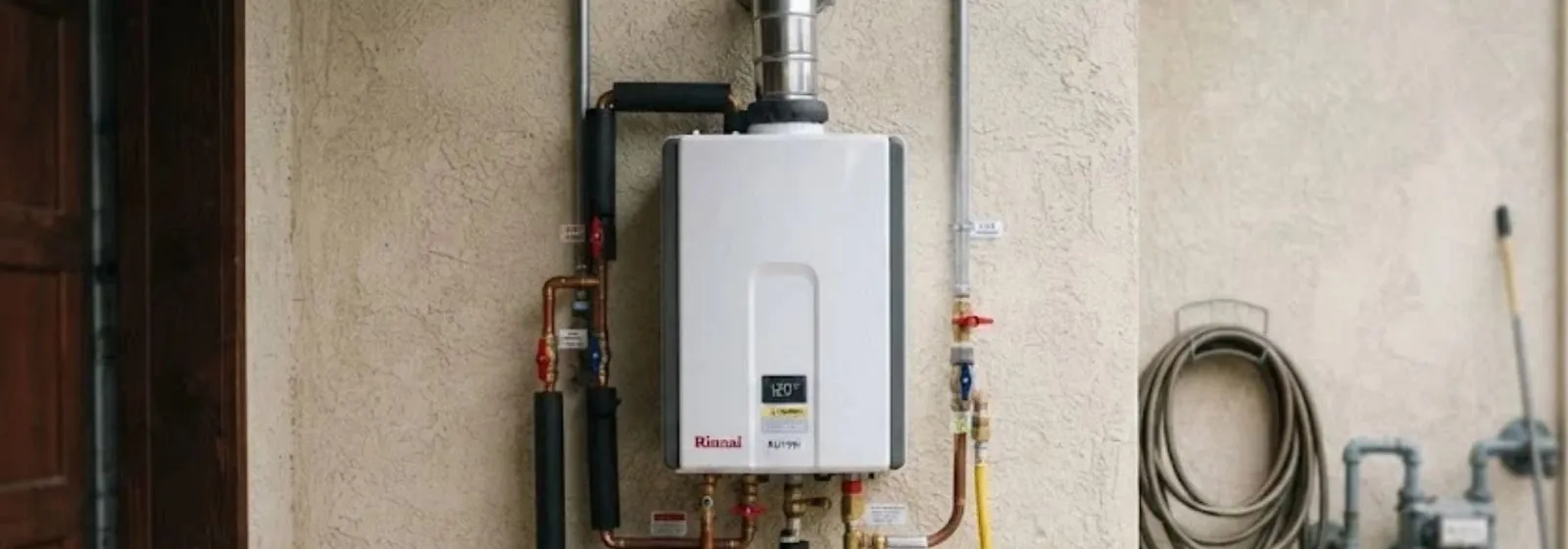
A tankless unit that sputters, drops to lukewarm or shows an error code is telling you something specific. The usual causes are scale inside the heat exchanger, a clogged inlet filter, a venting or airflow fault or a flow rate that is too low to fire the burner. That is exactly what a proper tankless water heater service visit sorts out.
We read the code, check flow and gas or power supply, and clean or repair what the unit needs. Most of these faults are fixable without replacing the whole heater.
How a tankless water heater works, and what it needs
A tankless heater warms water only when a tap opens. Water runs through a heat exchanger, and either a gas burner or electric elements bring it up to temperature. There is no storage tank, so there is no tank to fail or flood, but the unit has more electronics and a narrower margin for scale.
Because it heats on demand, a tankless unit needs the right gas line size or electrical capacity. Many tank-to-tankless conversions fail on that point, not on the heater itself.
Gas or electric tankless: choosing the right one
Gas tankless
- Higher flow, good for larger homes
- Needs a bigger gas line than a tank
- Needs a proper vent, often stainless or polypropylene
- Regular flushing matters in hard water
Electric tankless
- No venting, easier to place
- Draws a large electrical load
- May need a panel or circuit upgrade
- Better for small homes or point-of-use
If you smell gas near any gas appliance, leave the building and call the gas utility or 911 before you call a plumber. Do not try to relight or adjust the unit.
Tankless water heater flush and descale
Minerals in water settle inside the heat exchanger and turn into scale. Scale narrows the passages, forces the unit to work harder and eventually triggers error codes, noise and weak heat. A flush dissolves that scale before it causes damage, and it is the single most important routine job on a tankless unit.
We connect a pump and hoses to the service valves, circulate a descaling solution and rinse the system. We also clean the inlet filter and check flow and temperature when we finish. Many manufacturers call for a flush about once a year, and harder water may call for more often.
Palm Beach County Water Utilities supplies most of the Village from the Biscayne Aquifer. The reports we reviewed do not publish hardness, so ask the utility at (561) 740-4600 for the current figure. That number helps decide how often your unit needs service.
| Symptom | Likely cause | Next step |
|---|---|---|
| Water turns lukewarm | Scale on the exchanger | Descale and flush |
| Error code on display | Flow, scale or vent fault | Read the code and test |
| Noise or popping | Mineral buildup | Flush and inspect |
| Low flow at taps | Clogged inlet filter | Clean the filter |
Tankless water heater repair: common faults
Beyond scale, the usual failures are ignition faults, a dirty flame sensor, a failed flow sensor, a clogged vent or condensate drain and a tripped breaker on electric models. We test sensors, check the gas pressure or amperage and clean or replace what has failed. Some parts are model-specific, so we may need to order one.
A leak at the unit is different. Water at the service valves or connections is often a simple fix, but a leaking heat exchanger usually means replacement. If it is an urgent tank problem instead, see water heater repair.
Installing or converting to tankless
Installing a tankless unit means checking five things first: gas line size, venting route, electrical capacity, water pressure and wall space. Condensing gas units also need a drain for acidic condensate. We walk the house, check each item and tell you what has to change.
Permits come into play here. Most work in the Village requires a building permit and no water-heater-specific Village rule is published, so call the building department at (561) 790-5128. In Wellington, the Village says tankless installs need plan review.
- 1
Inspect and size
We check the existing heater, gas or electric supply and your peak hot water demand.
- 2
Plan the route
The vent, gas line, drain and wall mount are laid out before any cutting begins.
- 3
Install and connect
The unit is mounted with isolation valves so future flushes are easy. Gas and water joints are tested.
- 4
Commission
We run the unit through flow tests, set the temperature and show you the display, filter and valves.
Tankless versus tank: an honest comparison
Tankless units use no standby storage and take up less room. They also cost more to install and need regular flushing. If your household uses lots of hot water at once, a single unit may fall short and two may be needed.
For a homeowner replacing a failed tank, the standard route is a tank water heater installation. Tankless is worth the extra cost when you want the space back or expect to stay in the home for years.
We price the job after seeing the unit and the home.
Service type
A flush costs less than a repair, and both cost less than a new install.
Fuel and venting
Gas units need venting and a gas line. Electric units may need a bigger circuit.
Unit model and parts
Some models need special-order parts, which affects timing and cost.
Scale and condition
A unit that has gone years without a flush may take longer to clear.
Access
Wall height, attic runs and tight utility rooms add labor.
Some manufacturer warranties require proof of yearly flushing, so keep your service records. Call the 24/7 line and you get a clear price before work starts.
Call the 24/7 line and describe the code or symptom. We will line up a licensed, insured plumber, with same-day appointments when available.
Know your hardness
Hardness is not published in the county reports we reviewed, so ask Palm Beach County Water Utilities at (561) 740-4600. The figure sets how often you should flush.
South of Southern Blvd
Addresses there use Wellington Utilities at (561) 791-4010 rather than the county. Ask your own utility about water quality and pressure.
Licensed work only
Confirm any plumber at MyFloridaLicense.com under Verify a License, especially for gas work.
Sources and standards
Tankless units are installed to the Florida Building Code, Plumbing, 8th Edition (2023) and the manufacturer's written instructions, which set the flush and descale routine. The Village of Wellington states that tankless or solar units need plan review, so ask your building department what applies.
Royal Palm Beach tankless water heater questions
Why does my shower go cold after a minute, and is the tankless heater to blame?
Very often yes. Scale, a clogged inlet filter or a low flow rate can make the unit shut off and restart, which feels like cold water mid-shower.
A flush and a flow check usually find the cause.
How often should I flush a tankless water heater?
Many makers recommend about once a year. Harder water may call for more often, so ask the water utility about hardness.
What does an error code on my tankless heater mean?
Codes vary by brand, but common ones point to ignition, flow, venting or temperature faults. Give us the make, model and code, and we can narrow it down.
Can you convert my tank heater to tankless?
Often, once we check gas line size, venting, electrical capacity and wall space. We explain what has to change before you decide.
Do tankless heaters need a permit?
Most work in the Village requires a permit. Call the building department at (561) 790-5128 for your address.
Is tankless repair available after hours?
Our 24/7 line takes calls any time. We schedule most tankless service visits and add same-day appointments when available.
Question not answered here? Call the 24/7 line at (561) 448-8545 and talk to a plumber.