

The short answer: three ways to fix a slab leak
Once a leak under your concrete floor is confirmed, you have three real repair paths. You can break the slab and fix the pipe in place, reroute the line so it no longer runs under the floor, or repipe the house. The right one depends on how many leaks there are, what the pipe is made of and where it runs.
This guide covers the repair side only. If you are still trying to work out whether you have a leak, start with leak detection, then come back here once the location is known.
| Option | How it works | Best when | Main trade-off |
|---|---|---|---|
| Spot repair through the slab | Cut a small hole in the concrete, repair or replace that section of pipe | One leak, in an accessible spot, pipe otherwise sound | Pipe elsewhere under the slab stays old |
| Reroute | Cap the leaking line and run new pipe through walls or the attic | Leak in a hard-to-reach run, or repeat leaks on one line | Some wall or ceiling openings |
| Repipe | Replace most or all supply lines with new pipe | Several leaks, or pipe near the end of its life | The largest job, the most openings and patching |
Access methods: how the plumber reaches the pipe
Locating the leak first matters because it decides how big the hole is. An acoustic listening device and a pressure gauge narrow the leak down to a small area of floor. We mark that spot on the floor before anyone picks up a saw.
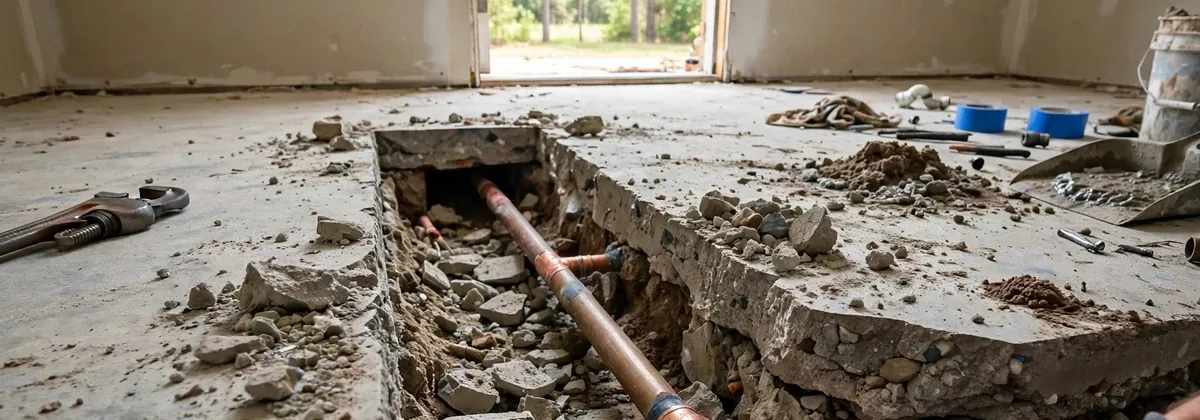
For a spot repair, a crew cuts a square in the floor with a concrete saw, removes the slab and soil to expose the pipe and makes the repair. The opening is usually small, but it still means dust, noise and moving furniture and flooring out of the way. Ask the crew how they plan to contain the dust.
Rerouting avoids the slab entirely. The plumber caps both ends of the damaged run and installs new pipe up through walls, across the attic or along the outside of the house. The openings are in drywall instead of concrete, and drywall is cheaper and easier to patch than a floor.
Spot repair, reroute or repipe: how to choose
Lean toward a spot repair when
- The leak is a single pinhole or joint failure
- Your pipe is copper in otherwise good shape
- The floor above the leak is easy to open
- You want the smallest repair today
Lean toward a reroute or repipe when
- This is the second or third leak
- The pipe is thin-walled or visibly corroded
- Water treatment or soil conditions are eating the pipe
- The leaking run sits under a kitchen or built-in cabinets
There is no universal rule, and we will not push the biggest job. A repipe makes sense when leaks keep returning, because each slab break repairs only one point in a system that is wearing evenly. If you only have one leak and pipe in good shape, a spot repair is a fair answer. Our plumbers explain both before you decide.
If the plan is to replace most of the supply lines, see our repiping page for how that work goes.
What your home looks like after the repair
After a spot repair the plumber pours new concrete into the opening, or leaves the hole ready for a flooring contractor, depending on the arrangement. The patch is level, but it will not match old tile or finished concrete. Hardwood, tile and carpet over the area need separate repair.
Be honest with yourself about matching. Tile that is no longer made, grout color and worn wood finish are hard to match, and a new patch usually shows. If appearance matters, ask about a flooring contractor before the break is made.
Reroutes leave drywall patches that need texture and paint. Painting and finish carpentry are usually separate trades, so plan for that step separately.
Insurance paperwork: what to document
Many homeowner policies cover some slab leak costs, but coverage varies a lot, and some exclude the pipe itself while covering resulting damage. Call your insurer early and ask what they require before work starts. We cannot tell you what your policy covers.
Documentation checklist for your claim
Build the file while the evidence is still visible. Adjusters often ask for it before they approve anything.
- Date you first noticed the problem and what you saw (warm floor, wet carpet, sound of water, bill increase).
- Photos and short videos of wet areas, stains and meter readings before and after.
- Water bills from before and after the leak started.
- The plumber's written report with the leak location and cause.
- Photos of the damaged pipe once exposed, and ask to keep the removed section.
- Invoices for repair, drying equipment and any flooring work.
- Name, number and claim number of your adjuster.
Permits and licensing
Do not skip the permit step. A slab break and a repipe are building-department matters, and the paperwork protects you when you sell the house. Ask us who pulls the permit and whether an inspection follows the repair.
Slab work also touches your water supply. Shutoff valves, meter connections and the water heater feed are all part of the plan, and your plumber should test the line under pressure before the floor is closed.
Royal Palm Beach note: permits and licensing
The Village of Royal Palm Beach says most work done in the Village requires a building permit, and the building department can be reached at (561) 790-5128. The Village does not publish a rule just for slab leak repairs or repiping, so call before the work begins. Florida plumbing work falls under the Florida Building Code, Plumbing, 8th Edition (2023).
You can confirm that any plumber is licensed at MyFloridaLicense.com using the Verify a License tool. Search by name, business name or license number.
Source type: Village of Royal Palm Beach building department web page, Florida Building Code publication and state licensing website
When a slab leak is urgent
Call right away if water is coming up through the floor, the meter spins with every fixture off or the floor is hot to the touch. Shut the main valve at the house, and turn off the water heater if the leak is on the hot side. You can reach the 24/7 line any hour, and we can often advise on the next step by phone.
If you smell gas, leave the house and call the gas utility or 911 before you call a plumber.
Our slab leak repair page explains what a visit involves, and homeowners in Wellington and Loxahatchee Groves often compare the same options.
Sources and standards
Slab repair methods are judged against the Florida Building Code, Plumbing, 8th Edition (2023), and the Village of Royal Palm Beach says most work needs a permit. Insurance questions are a policy matter, so read your own policy and ask your carrier.
Slab leak repair questions in Royal Palm Beach
Do you have to break the concrete to fix a slab leak?
Not always. A spot repair does mean cutting the slab, but a reroute runs new pipe through walls or the attic instead. The better choice depends on where the leak is and how much of the pipe is worn.
How long does a slab leak repair take?
It depends on the method. A spot repair is usually a one-day job plus any drying and floor work. A reroute or repipe takes longer, and we explain the schedule when you approve the plan.
Can I stay in the house during a slab leak repair?
Often yes for a spot repair or reroute, though you will lose water for part of the day and live with dust and noise. A full repipe is harder to live through. Ask for a plan that covers when the water will be off.
Will the repair match my existing floors?
Not perfectly in most cases. The concrete is patched, but tile, wood and carpet need separate repair by a flooring contractor, and old materials can be difficult to match.
What if my insurer does not cover the pipe?
Many policies cover resulting damage but not the pipe. Ask your adjuster in writing what is covered and keep every invoice. We give you a written description of the work for your file.
Is the water bill from a leak in Royal Palm Beach something I should call about?
Yes. Contact your water utility to ask about the bill, and tell them you found and fixed a leak. We cannot say whether any adjustment applies.
Question not answered here? Call the 24/7 line at (561) 448-8545 and talk to a plumber.