

The direct answer: what sets the price of a new water heater
A new water heater costs more or less depending on the type, the size, the fuel and how hard the installation is. The tank itself is only part of the bill. Venting, code upgrades, permits and old-unit removal can move the total as much as the heater does.
We do not post numbers here because the real price depends on your house. When you call, you get a clear price before work starts.
| Factor | Raises the price when | Keeps it lower when |
|---|---|---|
| Type | You choose a tankless unit | You stay with a standard tank |
| Capacity | The house has a big family or several baths | A smaller household needs fewer gallons |
| Fuel | Switching between gas and electric | Replacing the same fuel type |
| Venting | New or longer vent runs are needed | The existing vent is reusable |
| Location | The unit is in an attic or tight closet | It sits in a garage with easy access |
| Permits and extras | Expansion tank, drain pan and code upgrades are added | A like-for-like swap needs little extra |
Tank versus tankless
A tank heater stores hot water and keeps it warm all day. It is the lower upfront choice, and it is simple to repair. A tankless heater heats water as it flows, takes less floor space and does not run out during a long shower, but it costs more to buy and install.
A tank heater fits when
- You want the lower installed price
- The existing space and venting already work
- Hot water demand is steady and moderate
- You prefer a simpler appliance
A tankless heater fits when
- You have space limits or want a wall-hung unit
- Hot water use is high and constant
- You can afford the higher upfront cost
- Gas supply and venting can be upgraded
Tankless models often need a larger gas line, a new vent or higher electrical capacity. That is why the second option can cost much more once it is installed. We explain the details on our tankless water heater page.
Capacity, fuel and venting
Capacity is the number of gallons a tank holds, and bigger tanks cost more. A tank that is too small runs out of hot water, and one that is too big wastes energy. We size it to the number of people and bathrooms.
Fuel is the next major choice. Electric units are simpler to vent, while gas units need a flue and a gas line. Changing from one fuel to the other means new wiring or new pipe, which adds labor.
Venting is the hidden expense for gas heaters. Old flues may be the wrong size or corroded, and replacing them means extra parts and time. If you smell gas at any point, leave the house and call the gas utility or 911 before you call a plumber.
Location, expansion tank, drain pan and hauling
Where the heater sits changes the labor. A garage unit is usually quick to swap, while an attic or closet install means moving a heavy tank through a tight space. An attic heater also needs a drain pan and a line to carry leaks away, since a leak there ruins a ceiling.
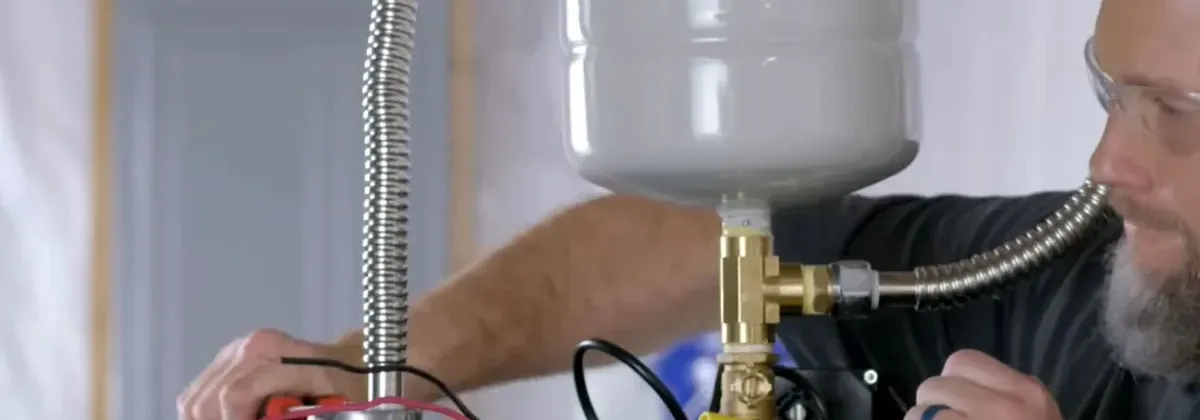
An expansion tank is a small tank on the cold supply line that absorbs pressure when the water heats up. Many installs need one, and it adds parts and time. Haul-away of the old heater, and the permit, round out the list.
Questions to ask any plumber about price
Quotes are easy to compare when the same items appear in each one.
- Is the permit included, and who pulls it?
- Is an expansion tank and a drain pan part of the job?
- Will the old heater be hauled away?
- Does the vent or gas line need to change?
- What does the warranty cover, and who handles it?
- Is the price written down before the work starts?
Repair or replace: a rule of thumb
Repair is usually worth it when the heater is fairly young and the problem is a single part, such as a thermostat, element or valve. Replace when the tank itself leaks, because that cannot be fixed. Replacement also makes sense when the unit is near the end of its normal life and repairs are stacking up.
Rust-colored water, rumbling from sediment and puddles at the base all point toward replacement. Our water heater repair team can tell you which side of the line you are on, and our water heater replacement page describes how a swap works.
Permits and local water quality
Royal Palm Beach note: permits and water
The Village building department says most work done in the Village requires a building permit. It does not publish a rule specific to water heaters, so call the department at (561) 790-5128 before replacing one. Palm Beach County has a like-for-like change-out form, but it applies to unincorporated areas, not the Village itself.
The county utility treats the eastern water system with chloramine. Ask Palm Beach County Water Utilities at (561) 740-4600 for current hardness, since it affects sediment and how long a tank lasts.
Source type: Village of Royal Palm Beach building department web page, Palm Beach County permit form and county water quality report
Permit rules differ between the Village, Wellington and Loxahatchee Groves. Ask which one applies before you accept a quote.
Sources and standards
A replacement tank is installed to the Florida Building Code, Plumbing, 8th Edition (2023), the standard inspectors use. Palm Beach County publishes a like-for-like water heater change-out form for unincorporated areas, while the Village of Royal Palm Beach asks that you call (561) 790-5128 first.
Water heater cost questions in Royal Palm Beach
Why do water heater quotes vary so much?
Quotes differ by type, size, fuel, venting, location and what is included. One may leave out the permit or haul-away while another includes everything. Compare the line items.
Is a tankless water heater worth the higher cost?
It can be for a home with limited space or high demand. It takes a bigger upfront spend and sometimes new gas, vent or electrical work. We will tell you whether your house is a good candidate.
How long does a water heater last?
It varies with water quality, use and maintenance. Sediment and leaks are the usual end of the line, and flushing a tank can help. A plumber can look at yours and give an honest read.
Do I need a permit to replace a water heater in Royal Palm Beach?
Most work in the Village requires a permit, and the Village does not publish a water-heater-specific rule. Call the building department at (561) 790-5128 before the job.
Can you replace my water heater today?
We offer same-day appointments when available, and the 24/7 line takes calls any hour. A burst tank or flooding is urgent, so shut the water supply and the power or gas to the heater first.
Question not answered here? Call the 24/7 line at (561) 448-8545 and talk to a plumber.