

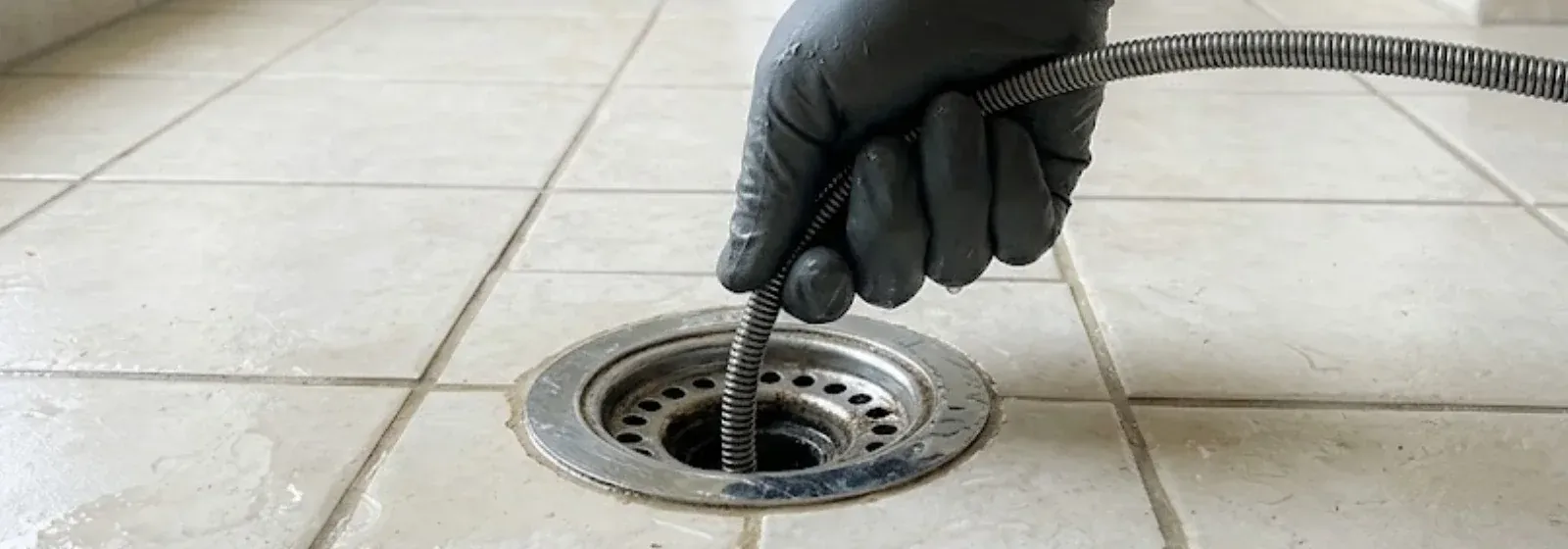
Main line clog or single fixture clog
Think of the drain system as a tree. Each fixture has a small branch, branches join a larger line, and that line runs to the sewer connection at the street. A clog on a branch affects one fixture or one bathroom. A clog on the main line affects everything that drains into it.
| What you see | Likely location | What it suggests |
|---|---|---|
| One sink slow, others fine | Branch line | Local clog, often hair or grease |
| Toilet and tub on one bathroom slow | Bathroom branch | Shared branch in that room |
| Washer drains and a toilet gurgles | Main line | Shared downstream pipe is restricted |
| Lowest drain backs up first, such as a shower | Main line | Water is looking for the lowest exit |
| Every fixture slow, sewage smell outside | Main line or street connection | Blockage past the house |
Signs the whole system is blocked
Gurgling from drains
Air pushed back through traps makes bubbling sounds in a sink or tub when another fixture empties. It means the line is partly blocked, not fully.
Toilet bubbles when the washer runs
The washer pumps a lot of water at once. If it pushes air or water into a toilet, the main line cannot carry the flow.
Backup in the lowest drain
A shower or floor drain on the lowest level often backs up first because gravity sends the water there.
Cleanout cap overflowing
A pipe with a cap in the yard or near the foundation is the cleanout. Water standing in it means the clog sits downstream of that point.
What to do while you wait
Slow the damage before a plumber arrives.
- Stop using water. No flushing, no showers, no washer or dishwasher.
- Do not pour chemical drain cleaners into a main line backup. They can burn skin and damage pipe.
- Move rugs and belongings away from the lowest drains.
- If sewage reaches the floor, keep children and pets out and wear gloves.
- Find the cleanout cap but do not open it unless you know how, since pressure can spray.
What caused the whole-house blockage
Tree roots find the tiny gaps at old pipe joints and grow into thick masses. Grease hardens in the line and catches wipes. A belly, which is a low sag in the pipe, holds water and collects solids.
Wipes labeled flushable do not break down the way toilet paper does. They catch on roots or rough pipe and build a plug. This is one of the most common reasons we see for repeat main line calls.
How a plumber clears and checks the line
- 1
Locate the cleanout
We find the cleanout access near the house, pull the cap carefully and see how high the water stands.
- 2
Run a cable or jetter
A cable cuts through the clog. For grease, roots and heavy buildup, a high-pressure jetter scours the pipe wall. Our sewer line cleaning work uses both depending on what the line holds.
- 3
Camera the line
A small camera on a flexible rod shows cracks, offsets, roots and bellies. A clear camera view tells you whether the clog was a one-time event or a sign of damage.
- 4
Report and plan
You get a plain explanation of what was found and what to do about it, with a clear price before work starts for any repair. Nothing gets fixed until you understand it.
Cable, jetting or repair
Cable or jetting is enough when
- The camera shows a clean pipe wall after clearing
- The clog was grease, paper or wipes
- There is no offset or crack at the blockage
- Regular maintenance cleaning is planned
Repair is needed when
- Roots return within weeks or months
- The camera finds a break or collapsed section
- A belly keeps holding water and solids
- The line is old and the same problem repeats
If the pipe itself is damaged, the next step is drain cleaning followed by a plan for repair, which can range from spot repair to replacing a run. Clearing alone only treats symptoms.
Sewer or septic: what a backup means where you live
Royal Palm Beach homes drain to the county sewer system. If the main line on your property is clear and the backup continues, the blockage may be in the county's connection or main, and the utility handles that side. Plumbers handle the pipe on your property up to the connection.
Nearby areas work differently. Most of Loxahatchee Groves relies on septic systems, and The Acreage has many septic homes too. There, a house-wide backup can mean a full tank or a failed drain field, which a line cleaning alone will not fix. Our Loxahatchee and The Acreage coverage visits start by finding out which system the home has.
Royal Palm Beach note: who handles which pipe
Palm Beach County Water Utilities provides both water and sewer service to the Village, and the Village's comp plan names the county as the coordinating provider for both. The utility's customer line is (561) 740-4600.
The Village's billing FAQ also says addresses south of Southern Blvd are served by Wellington Utilities at (561) 791-4010. If your backup reaches the street connection, calling the right utility saves time. The Town of Loxahatchee Groves reports that it provides no water or sewer service to residents.
Source type: Village government pages and county and town planning documents
Keeping the line clear
Flush only toilet paper. Collect cooking grease in a can. Have the main line cleaned and scoped if you buy an older home or see slow drains in more than one room.
Sources and standards
Sewer lines on private property fall under the Florida Building Code, Plumbing, 8th Edition (2023), and the Village of Royal Palm Beach building department at (561) 790-5128 can say which work needs a permit. The Village states that most work done in Royal Palm Beach requires a building permit.
Royal Palm Beach clogged drain questions
Why are all my drains backing up at the same time?
Because they share the main line, and the blockage sits downstream of where they join. A single clogged fixture would not affect the others.
Is a house-wide backup my problem or the county's?
Often it is on your property, which a plumber can check from the cleanout. If the line on your side is clear and sewage still backs up, contact the county utility at (561) 740-4600.
I live in Loxahatchee Groves or The Acreage. Is it the same issue?
Not necessarily. Many homes there use septic systems, so the cause may be a full tank or drain field. We find out the system type before we clear anything.
Will a chemical drain cleaner fix it?
Not on a main line, and it can hurt you and the pipe. A cable or jetter removes the blockage mechanically.
Why does my toilet bubble when the washing machine drains?
The washer discharges a lot of water fast. If the main line is partly blocked, displaced air escapes through the nearest trap, which is often the toilet.
Can I find my cleanout myself?
Look for a capped pipe near the foundation or in the yard, often near the wall where the main exits. If you cannot find it, we can.
Question not answered here? Call the 24/7 line at (561) 448-8545 and talk to a plumber.